
Your cart is emptyStart Shopping
Login
Please enter your phone number to continue
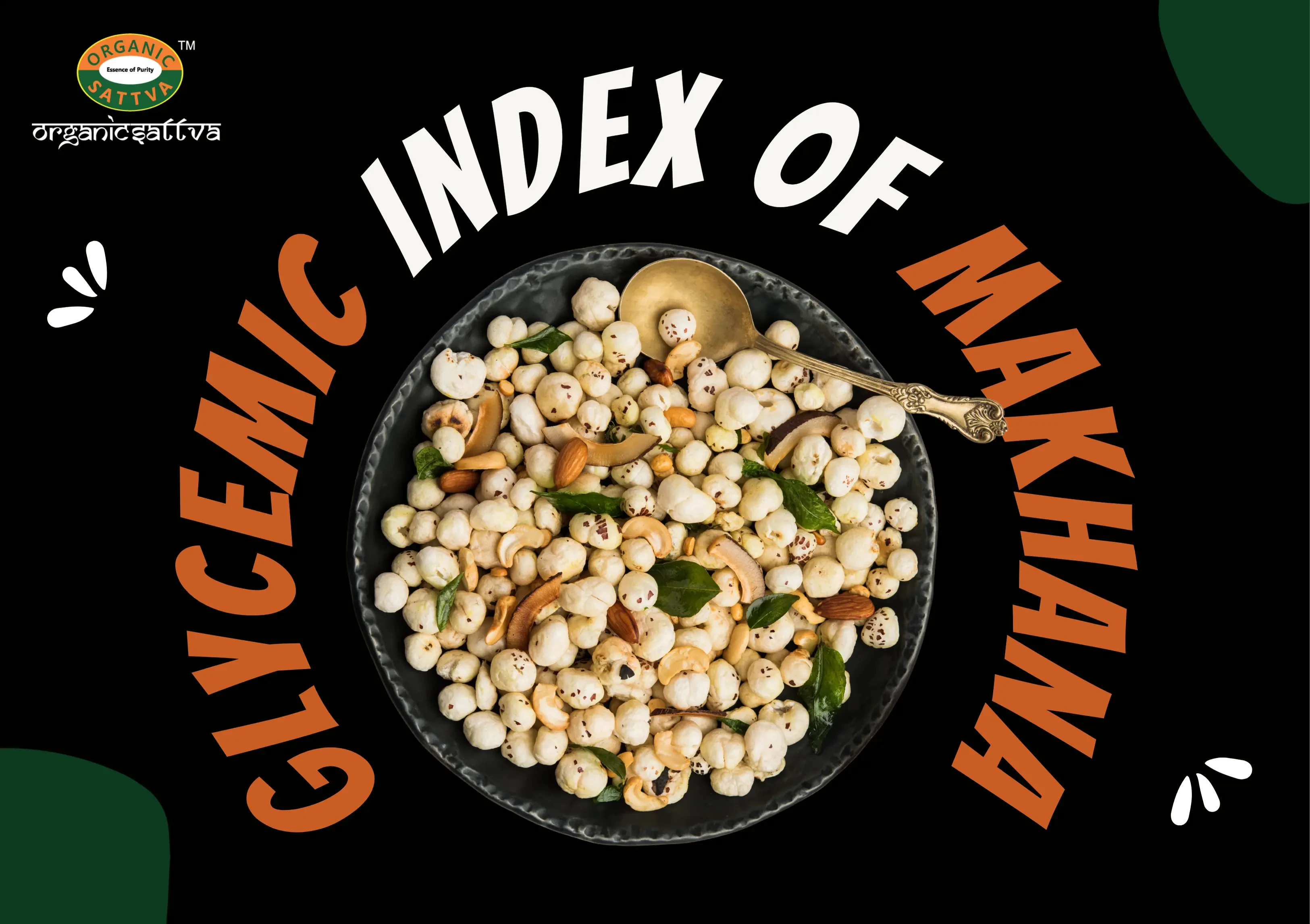
Glycemic Index of Makhana & Its Role in Diabetes Management: What Science Says
Makhana
Have you ever thought that even a simple, traditional snack like makhana can possibly help with blood sugar levels?
As diabetes is rising in all age groups, the population is actively seeking healthy, nutritious, and safe blood sugar control foods. Here, the makhana, or fox nuts or lotus seeds have received a lot of focus. Knowing the Glycemic Index of Makhana can make you decide whether it should be included into the list of foods that are fit in a diabetes-friendly diet or not.
Here, we shall un-scientify the science in a very simple and easy way in this blog. We shall be discussing the effects of makhana on blood sugar, its nutritional content and how one can make it smart to manage diabetes.
Understanding the Glycemic Index in Simple Terms
The glycemic index (GI) is the scale that determines the speed with which a food increases the level of blood sugar following its intake. Foods are normally categorized as:
- ✔️ High Fiber Index (Protein intake)
- ✔️ Medium GI
- ✔️ Big spike in GI in blood sugar.
The selection of food with a low GI is vital among individuals with diabetes. This is why doctors suggest low-GI diets. They keep blood sugar levels steady. Sudden sugar spikes are reduced. Energy stays balanced for longer. Metabolism works more smoothly over time.
What Makes Makhana Special?
Makhana is an Indian snack that has been eaten since ancient times, on both fasting and light snacking. However, outside tradition, modern science has begun to realize its nutritional worth.
When we observe the makhana nutrition facts, we understand that it is:
- ➤ Low in fat
- ➤ High in complex carbohydrates.
- ➤ One of the best sources of plant-based protein.
- ➤ High in fiber
- ➤ Naturally gluten-free
All these features already ensure that makhana is a potential snack among individuals dealing with diabetes.
Glycemic Index of Makhana: What Research Suggests
Makhana has a Glycemic Index that is rated as low to moderate, and that is why it does not raise the level of sugar in the blood when consumed in moderate amounts. This gradual digestion and absorption is useful in ensuring that the glucose levels in the blood are maintained.
This is because it contains fiber and resistant starch. Fiber will delay the digestive process, and the sugar will not get into the blood in large amounts, but rather gradually. This makes makhana appropriate to be added as a part of meals and snacks among diabetic patients.
Glycemic Load: Why Portion Size Matters
Whereas GI is a measure of the rate at which sugar is absorbed into the blood, glycemic load takes into account the GI as well as the amount of food. Glycemic Index of Makhana is low, especially when taken in moderation.
This implies that although you have a small bowl of roasted, it will not burden your body with glucose. Nonetheless, excessive intake of food can create problems just like any food. Proportion and moderation are essential.
Makhana as Part of a Diabetes-Friendly Diet
People with diabetes need low-GI foods. Makhana fits when cooked simply. Avoid excess oil, salt, and sugar.
Roasted makhana beats fried snacks. Keeps you full for longer. Provides steady energy and nutrients. Helps control sugar cravings. Supports stable blood sugar levels.
For a deeper dive into why makhana is ideal for diabetics, check out our detailed blog: Is Makhana Good for Diabetics? A Nutritionist’s Perspective – it covers nutrition facts, portion sizes, best ways to eat, and timing for maximum blood sugar benefits.
Calories in Makhana: Light Yet Filling
A lot of individuals believe that healthy snacks can never be satiating but makhana disproves this notion. The amount of Makhana calories is comparatively low compared to chips, biscuits or fried namkeen.
With its fiber and protein, a little serving will give you sufficient energy to satiate you longer. This will assist in avoiding unnecessary snacking, which in most cases is a problem to individuals who are dealing with diabetes and weight simultaneously.
Health Benefits Beyond Blood Sugar Control
Other than its influence on blood glucose, makhana has a number of other benefits. The makhana health benefits are:
- 🗹 Supporting heart health
- 🗹 Assistance in weight control.
- 🗹 Improving digestion
- 🗹 Airing antioxidants against inflammation.
One can find the given benefits particularly significant as those with diabetes have higher risks of heart disease and digestive problems.
Best Time to Eat Makhana for Diabetes Management
The timing of food also contributes to the influence of food on blood sugar. It can be made more efficient by knowing the best time to eat makhana.
Some ideal times include:
- → Snack between meals to avoid dips in energy levels.
- → Evening snack to prevent unhealthy snacks.
- → As a low-calorie food supplement to get additional fiber.
This consumption of makhana at such times helps to maintain constant energy levels without spikes in sugar levels.
How to Prepare Makhana the Right Way
It is the preparation that is equally important as the food. To be diabetes-friendly, consume:
- → Roast makhana and do not fry.
- → Use minimal oil or ghee.
- → Avoid sweetening and saltiness.
- → Add spices such as turmeric or black pepper in small amounts.
Easy cooking does not affect its nutritional value and makes it still appropriate for regulating blood sugar.
Scientific Perspective: Why Makhana Works
Scientifically, the effect of makhana on blood sugar is determined by:
- → Low fat content
- → Complex carbohydrates
- → Slow digestion rate
These aspects combine to avoid the sudden spikes in glucose. This is the reason why makhana is commonly suggested as a healthier snack choice in a dietary plan dedicated to diabetes.
Makhana vs Common Snack Foods
Makhana is healthier than biscuits, white bread, or fried snacks when comparing them. Several snacks popularly consumed contain refined carbohydrates, which rapidly increase the sugar levels. Makhana, on the other hand, helps in the gradual release of glucose and lasting satiety.
Substituting bad snacks with makhana may be an easy but effective measure toward improved management of diabetes.
Can Everyone with Diabetes Eat Makhana?
Generally, makhana can be consumed by a majority of diabetics without problems, provided that it is consumed in moderation. Nonetheless, different people react to food differently. It is generally good practice to monitor the level of sugar in the blood after adding any new food.
It can be advised to consult a healthcare provider or a dietician to make the intake individualized.
Final Thoughts
Makhana is not a mere snack made traditionally, but a scientifically proven food that can easily be included in diabetes-friendly diets. It is a smart snack due to its low calories on blood sugar, and it is also a nutritious food.
Through the knowledge of its functioning on the body and with the food, diabetes patients can have a delicious snack without jeopardizing their health. A minor decision made on a regular basis can make a tremendous impact in the management of diabetes in the long run.
Also Read : How to Eat Makhana with Milk
Frequently Asked Questions
1. Is makhana safe to eat daily for people with diabetes?
Yes, you can consume makhana in moderate amounts and as part of a balanced diet every day, particularly when it is cooked without sugar or extra oil.
2. Can makhana replace regular snacks for blood sugar control?
Makhana can also be a healthier version of processed snacks to stabilize the level of sugar in the blood and eliminate hunger.
3. Does roasting makhana change its effect on blood sugar?
Dry roasting is not a major contributor to its effects on blood sugar, and it is among the healthiest techniques of consuming makhana.