
Your cart is emptyStart Shopping
Login
Please enter your phone number to continue
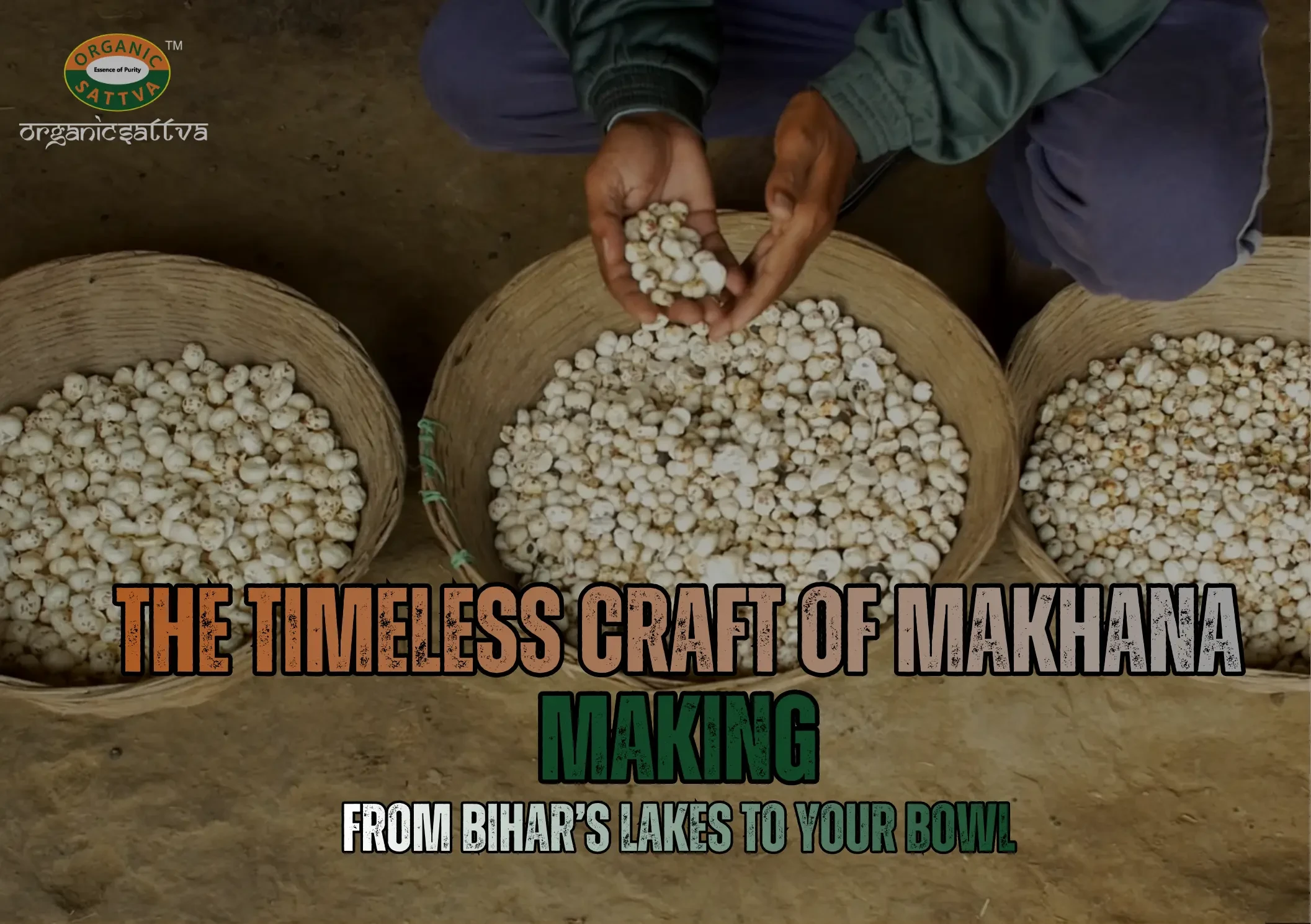
The Timeless Craft of Makhana Making: From Bihar’s Lakes to Your Bowl
Makhana
A calm pond in the Bihar countryside, glistening under the soft early-morning sun… its still waters hide tiny treasures—not pirate gold, but makhana seeds patiently maturing in a serene wetland.
From this quiet habitat emerges one of India’s finest superfoods: phool makhana, or fox nut.
Its journey from pond to plate is an art form—steeped in tradition, skill, labour, and patience.
🌱 Origins and Cultivation Environment
Makhana (Euryale ferox) grows naturally in shallow water bodies—ponds, wetlands, and marshes.
Its large floating leaves, often exceeding a meter, resemble those of water lilies.
Makhana cultivation is an age-old heritage of the Indian subcontinent, especially Mithila in Bihar.
Districts like:
✔ Madhubani
✔ Darbhanga
✔ Purnia
produce more than 90% of the country’s total makhana, linking the region deeply with its identity.
🛶 The Laborious Harvest
This is where tradition truly shines—harvesting is fully manual.
Skilled divers, often from the Mallah fishing community, plunge into murky waters to collect lotus-like seed pods.
The challenges are immense:
✔ poor visibility
✔ heavy sediment
✔ extreme physical effort
✔ the need for stamina and precision
Once collected, the seeds are sun-dried—a crucial step to achieve the perfect moisture level for roasting.
🔥 The Popping Magic
Roasting makhana seeds is nothing like microwave popcorn.
The dried seeds are heated in large iron pans over fire.
As internal moisture turns into pressure—POP!
The seed bursts open into a white, airy, crispy makhana.
After popping, workers undertake:
✔ cleaning
✔ polishing
✔ grading
—all manually—to separate perfectly popped makhana from smaller or unpopped ones.
⚙️ Cultivation Challenges & Innovations
Traditional makhana farming has always been labor-intensive:
✔ manual harvesting
✔ fire-based roasting
✔ dependence on pond water levels
If a pond dries prematurely, the entire crop is lost.
Modern Solutions
Thanks to research institutions and government programs:
✔ High-yielding varieties like Swarna Vaidehi are improving productivity
✔ Aquaponics and modern aqua-farming systems are emerging
✔ Credit support and training programs are uplifting farmers
These innovations support both efficiency and sustainability.
🎭 Cultural Significance & Recognition
In Mithila, makhana is deeply woven into tradition:
✔ used in festivals
✔ served in weddings
✔ central to ceremonial cuisine
Its cultural and geographic importance earned it the prestigious GI Tag—Mithila Makhana—enhancing its visibility and global demand.
👥 Economic and Social Impact
Beyond the serene ponds, makhana supports entire communities.
The Mallah community, often from economically weaker backgrounds, relies heavily on seed collection for livelihood.
Despite rising global demand, low wages and lack of organized infrastructure remain challenges.
Positive Changes Are Rising
✔ Government initiatives and institutions are:
✔ promoting organic makhana farming
✔ supporting Bihar's “Green to White Organic Revolution”
✔ introducing mechanization while preserving the craft
These reforms aim to ensure better incomes and improved working conditions.
🌍 Why the World Loves It (Beyond Taste)
Makhana isn’t just Instagram-worthy—it’s a nutritional powerhouse:
✔ low in fat
✔ rich in protein
✔ loaded with minerals (calcium, phosphorus, potassium)
This makes it ideal for:
✔ fitness lovers
✔ yoga enthusiasts
✔ weight-conscious snackers
✔ anyone seeking a clean, natural snack
With its “ancient superfood” appeal, makhana is winning hearts worldwide.
✨ In Closing
From the tranquil lakes of Mithila to snack bowls around the globe, Organic Sattva Makhana represents a blend of:
✔ tradition
✔ nature
✔ craftsmanship
✔ innovation
Every puff carries the story of divers, farmers, artisans—and an age-old legacy preserved through generations.
So next time you enjoy makhana, pause and appreciate the journey of this tiny white delight that traveled from Bihar’s ponds to your plate.
FAQs
Q1: What makes Makhana from Bihar special?
A: Bihar produces over 90% of India’s Makhana, especially in districts like Madhubani, Darbhanga, and Purnia. Its traditional cultivation, manual harvesting, and unique roasting process give it superior texture, taste, and nutritional quality.
Q2: How is Makhana harvested and processed?
A: Makhana is harvested manually by skilled divers who collect lotus-like seed pods from ponds. The seeds are sun-dried and roasted over fire until they pop into crispy, airy snacks. Post-roasting, the seeds are cleaned, polished, and graded manually.
Q3: Why is Makhana considered a superfood?
A: Makhana is low in fat, high in protein, and rich in minerals like calcium, phosphorus, and potassium. It’s ideal for fitness enthusiasts, weight-conscious individuals, and anyone seeking a clean, nutritious snack.