Your cart is emptyStart Shopping
Login
Please enter your phone number to continue
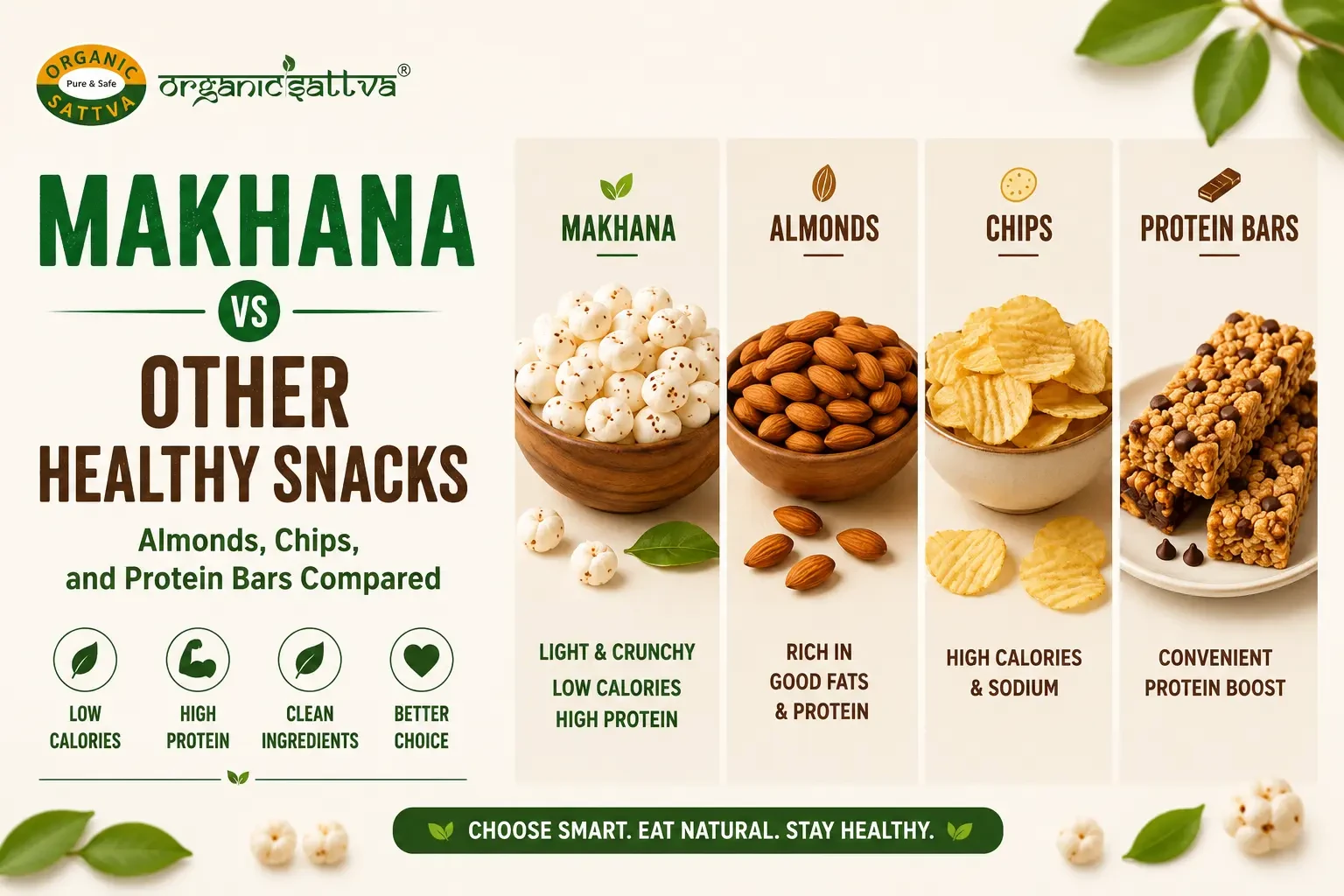
Makhana vs Other Healthy Snacks: Almonds, Chips, and Protein Bars Compared
Makhana
Picking a snack sounds simple — until you're standing in a grocery aisle staring at twelve different "healthy" options, each one promising to be the best choice. Almonds, makhana, protein bars, baked chips — they all claim a spot in your diet. But how do they actually stack up?
If you've been trying to figure out the makhana vs other snacks debate, you're not alone. A lot of people are making the switch to cleaner snacking but aren't sure where makhana fits compared to options they already know. Let's break it down honestly.
Why Compare Healthy Snacks?
Not all snacks do the same job. Some fill you up, some just keep your hands busy. Some are genuinely nutritious, others are just marketing dressed up in a brown paper bag.
When you're comparing snacks, the things that actually matter are:
⬨ Calories — how much energy you're consuming per serving
⬨ Protein — keeps you full and supports muscle
⬨ Fat — type matters more than quantity
⬨ Fiber — helps digestion and controls hunger
⬨ Ingredients — shorter the list, usually the better
⬨ Cost — sustainability of the habit
With that frame, here's how makhana holds up.
Makhana vs Almonds
Both are considered premium snacks in Indian households. But they serve slightly different purposes.
Almonds are calorie-dense — around 579 calories per 100g — and pack roughly 21g of protein alongside healthy fats. They're great for satiety and loaded with Vitamin E. But if you're watching calories or tend to overeat nuts, almonds can add up fast. Thirty grams of almonds is about 20 pieces, and most people eat double that without realising.
Makhana, on the other hand, has around 347 calories per 100g with about 9–10g of protein. The fat content is significantly lower — under 1g per 100g — making it a much lighter snack. It's also easier to eat in larger volumes without crossing your calorie limit.
➣ Choose almonds if: you need sustained energy, post-workout nutrition, or you're following a high-fat diet.
➣ Choose makhana if: you want a low-fat, high-volume snack for weight management, or you need something light for evenings.
For everyday snacking without calorie guilt, buy raw makhana online and roast it at home with minimal seasoning.
Makhana vs Chips
This one isn't even close.
Regular potato chips average 536 calories per 100g — most of that coming from refined oil and simple carbs. The sodium levels are high, fiber is nearly zero, and the "crunch satisfaction" fades within minutes, leaving you reaching for more.
Makhana gives you the same crunch. Same hand-to-mouth snacking habit. But with a fraction of the oil, far fewer calories, and no refined ingredients. It's also gentler on your stomach, which matters if you snack at night.
The satiety factor is real too — makhana has a low glycemic index, so blood sugar doesn't spike and crash the way it does after chips.
If you're someone who snacks out of habit or stress, swapping chips for makhana is probably the easiest, least painful dietary change you can make.
Makhana vs Protein Bar
Protein bars have a marketing problem — they sound like health food but most of them read like a chemistry experiment on the label.
A standard protein bar gives you 20–25g of protein per 100g, which sounds impressive. But look closer — added sugars, sugar alcohols, artificial flavours, emulsifiers, and preservatives are common. Many bars have 300–400 calories and more sugar than a small chocolate.
Makhana has less protein per serving, no question. But it also has zero artificial ingredients, no added sugar, and is as minimally processed as a snack can get.
For makhana vs protein bar, the answer depends on your goal. Post-gym, a protein bar makes sense if you need a quick protein hit. But for general snacking — office, travel, evening hunger — makhana is cleaner, lighter, and cheaper.
Explore the flavoured makhana collection if you want variety without compromising on clean ingredients.
Calories Comparison Table
| Snack | Calories (per 100g) | Protein | Fat | Fiber |
| Makhana | 347 kcal | 9.7g | 0.1g | 14.5g |
| Almonds | 579 kcal | 21.2g | 49.9g | 12.5g |
| Potato Chips | 536 kcal | 7g | 35g | 4.4g |
| Protein Bar | 350–420 kcal | 20–25g | 8–12g | 3–5g |
Values are approximate and vary by brand.
Which Snack Is Best for Different Goals?
⬨ Weight loss → Makhana. Low fat, low calorie, high fiber, keeps you full.
⬨ Gym / muscle building → Protein bar or almonds for higher protein post-workout.
⬨ Office snacking → Makhana. No smell, no mess, easy to portion.
⬨ Kids → Makhana. No added sugar, no artificial colours, safe for daily use.
⬨ Diabetes-friendly → Makhana. Low GI, doesn't spike blood sugar rapidly.
⬨ Clean eating → Makhana. Single ingredient, no processing, no label confusion.
Why Organic Sattva Makhana Is a Better Choice
Most makhana you find in local stores or on large marketplaces doesn't tell you where it came from or how it was processed. That matters more than people think.
Organic Sattva sources premium Bihar makhana — the GI-tagged variety known for its larger size, better crunch, and cleaner taste. No artificial preservatives, no added colours, no mystery ingredients.
Bihar produces over 80% of India's makhana, but not all of it is the same grade. Organic Sattva specifically works with high-grade produce sourced directly, which means what you're snacking on daily is actually worth snacking on.
For something you eat regularly, that sourcing difference is worth paying attention to.
The Bottom Line
Almonds are nutritious but calorie-heavy. Chips satisfy the crunch but at a real cost. Protein bars have their place, mostly around workouts. But for clean, everyday, guilt-free snacking — makhana genuinely wins the healthiest snack comparison.
It's not about being perfect with your diet. It's about making better default choices. And makhana is one of the easiest switches you can make.
Give it two weeks as your go-to snack. You'll stop reaching for the chips packet.