
Your cart is emptyStart Shopping
Login
Please enter your phone number to continue
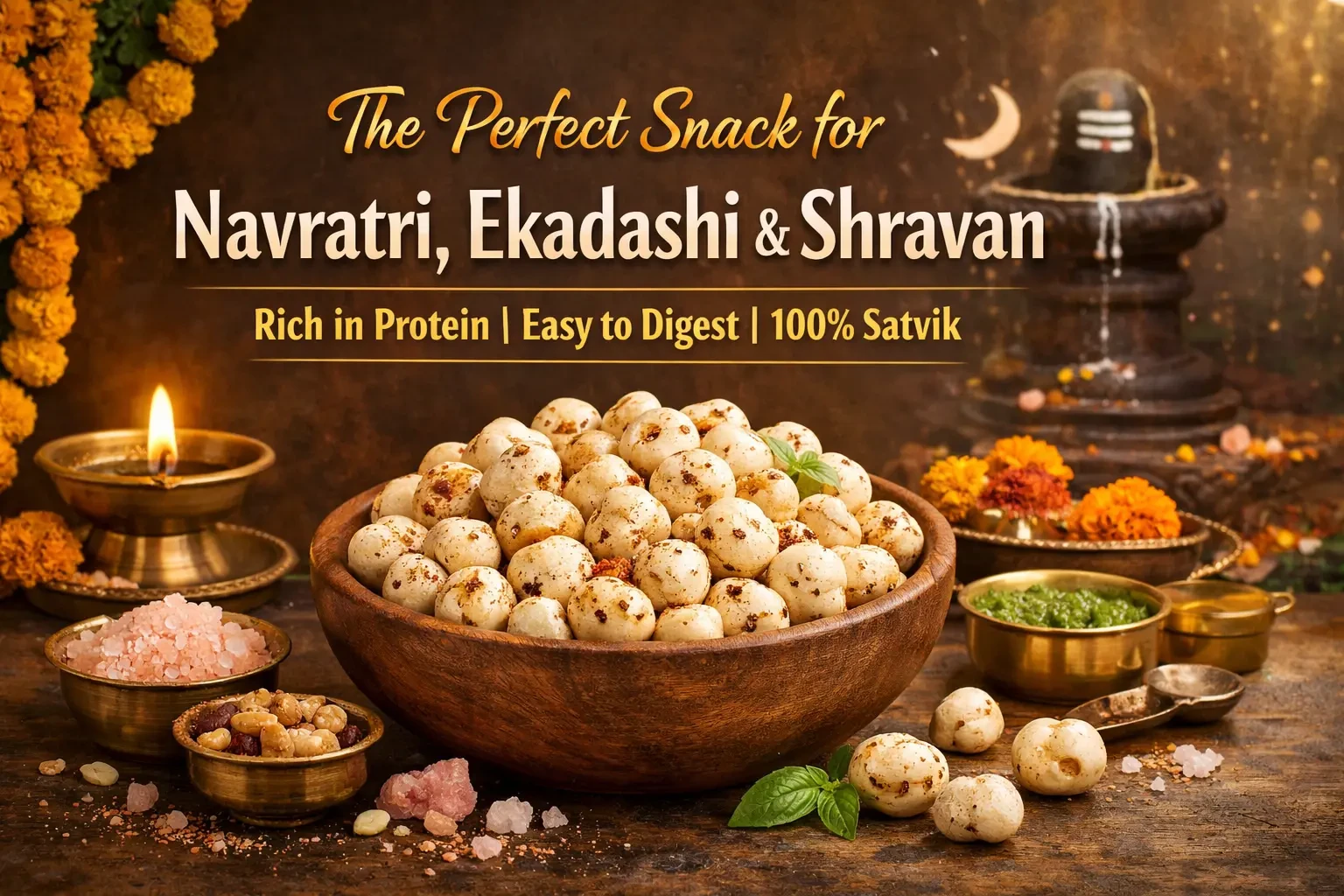
Makhana for Fasting: Navratri, Ekadashi & Shravan Guide
Makhana
Every fasting season brings the same question : what can I actually eat that keeps me going? You skip grains, avoid onion and garlic, and suddenly your food options feel very small. By midday, hunger sets in. Energy dips. The fast starts feeling harder than it should.
Makhana for fasting solves most of that. Quietly, simply, without any fuss. It is light on the stomach, accepted across nearly every major Hindu fast, and surprisingly filling for how few calories it carries. If you are fasting for Navratri, Ekadashi, or Shravan — makhana deserves a regular spot on your vrat plate.
In this article, you will explore the reasons that makes makhana one of the most sought after food items during vrat and how it fits perfectly in our fasting diet.
What Makes Makhana the Best Low Calorie Fasting Food?
Fasting is not just a spiritual practice. The body still needs fuel. That is where makhana quietly earns its place.
A 30-gram serving of makhana contains roughly:
| Nutrient | Amount (per 30g) |
|---|---|
| Calories | ~105 kcal |
| Protein | ~4g |
| Carbohydrates | ~20g |
| Fat | ~0.5g |
| Magnesium | ~67mg |
| Calcium | ~60mg |
It is a genuinely low calorie fasting food that still gives you energy without weighing you down. No heaviness. No mid-afternoon slump. Just steady, clean fuel, exactly what a long fasting day needs.
Makhana for Navratri — What Makes It the Go-To Vrat Snack
Navratri is nine days. That is a long time to keep your energy steady while eating within the rules of the vrat.
Makhana for Navratri works because it is light, satisfying, and endlessly versatile. A handful of raw Makhana roasted in cow Ghee with sendha namak is one of the most popular Navratri snacks for a reason. The food takes five minutes to prepare and it provides complete satisfaction while remaining gentle on digestion during extended fasting periods. The following list shows all the dishes which can be prepared with makhana during the Navratri festival.
➤ Ghee roasted makhana with sendha namak — simplest, most satisfying
➤ Makhana kheer with milk and jaggery powder — sweet, filling, and completely vrat-friendly
➤ Makhana sabzi in light gravy — works as a small meal
➤ Makhana and dry fruit mix — easy to carry and eat between prayers
Makhana for Ekadashi Fast — Light, Satvik, and Grain-Free
Ekadashi is observed twice a month. On this day, grains are strictly off the table. The stomach should feel light, and the mind should feel calm.
Makhana for Ekadashi fits those requirements exactly. The product contains no grains and satvik ingredients and its consumption does not disrupt the digestive process during extended fasting periods. People who maintain daily Ekadashi fasts use a small container of roasted makhana as their daytime snack because it satisfies their hunger without disrupting their fasting practice.
The makkhanas become crisp when you roast them on low flame inside a pan. Ghee should be used in small quantities with a sendha namak pinch. That is it. Crisp, warm, and completely Ekadashi-safe.
Makhana in Shravan Month — Satvik Eating at Its Best
Shravan (also spelled Sawan) is considered one of the holiest months in the Hindu calendar. Many people fast on Mondays, some on all seven days of the week. Sattvik food for fasting becomes the norm for the entire month.
Makhana in Shravan month is a natural fit. It is considered one of the purest satvik foods available. No tamasik properties. No heavy digestion load. It keeps the body comfortable through the devotional discipline of the month.
Why makhana suits Shravan specifically:
➜ No onion, garlic, or non-veg — fully satvik
➜ Easy to prepare in bulk for the whole week
➜ Comfortable even on days of strict water-only fasting (eaten before the fast begins)
➜ Pairs naturally with milk, curd, and seasonal fruits that dominate Shravan eating
Ghee Roasted Makhana for Vrat — The Easiest Recipe
Ghee roasted makhana is the most popular way to eat makhana during any fast. Here is how to make it right.
You will need:
➜ 2 cups raw makhana
➜ 1 tsp cow Ghee
➜ Sendha namak to taste
➜ Optional: black pepper, cardamom powder
Steps:
1. Heat a heavy pan on low flame.
2. Add ghee and let it melt.
3. Add makhana and roast slowly, stirring gently, for 8–10 minutes until crisp.
4. Add sendha namak and any optional spices.
5. Cool completely before storing in an airtight container.
That’s it. Store for up to a week and you have a ready fasting snack for the entire Navratri or Shravan week.
Makhana Kheer Recipe for Fasting
Makhana kheer is the go-to sweet dish for fasting days — especially Navratri and Ekadashi. Rich, comforting, and completely grain-free.
Ingredients:
- 1 cup Raw Makhana (lightly roasted)
- 500ml full-fat milk
- 2 tbsp Jaggery Powder
- 4–5 cardamom pods (crushed)
- Chopped cashews or almonds
Steps:
- Lightly crush the roasted makhana.
- Bring milk to a boil then simmer.
- Add makhana and cook 10–12 minutes.
- Add jaggery powder and cardamom.
- Serve warm or chilled.
Note: Using jaggery instead of sugar gives natural sweetness and makes it more suitable for fasting.
What to Look for in Makhana for Fasting:
- Single ingredient (no additives)
- Chemical-free processing
- Sourced from Bihar (best quality)
- Organic certified
Foods to Avoid During Fasting:
- Regular salt (use sendha namak)
- Grains like wheat and rice
- Onion and garlic
- Excess refined sugar
Make Your Fasting Healthier with Pure Makhana
Choose clean, chemical-free makhana for your Navratri, Ekadashi, and Shravan fasts. Light, satvik, and sourced from the best farms of Bihar.
Shop Raw MakhanaFasting requires no food deprivation. The fasting period requires the right food which makes makhana the best choice of food for all three fasting days of Navratri and Ekadashi and Shravan. The product satisfies satvik dietary requirements. The product satisfies farali dietary requirements.
The process requires simple cooking methods. The dish provides sustained energy throughout the entire day dedicated to prayer and fasting and devotion. The roasting method with ghee creates a fast snack while the simmering method with kheer produces a complete dinner and the user can eat makhana whenever they wish.
Ready to stock up before the next fast?
Explore Organic Sattva’s range of raw makhana and flavoured Makhana — pure, chemical-free, and sourced directly from Bihar’s best farms.
FAQs
1. Can we eat makhana in fast?
Yes. Makhana is a fully farali food. It is satvik, grain-free, and accepted across nearly all Hindu fasting traditions including Navratri, Ekadashi, Shravan, and Shivratri.
2. Is makhana good for Ekadashi fast?
Makhana for Ekadashi fast is one of the best options. The food offers a complete grain-free solution which provides easy digestion while sustaining hunger control throughout extended fasting periods.
3. What is the difference between raw makhana and flavored makhana for fasting?
Raw makhana is the best option when it comes to a strict fast. It doesn’t contain any added ingredients. Flavored makhana may have added spices that may not be suitable for a strict fast. It’s always best to check the ingredient list.
4. Is Makhana Farali?
Yes, makhana is fully farali. It is a naturally satvik food that does not fall under grain, lentil, or non-veg categories. That makes it permissible across virtually all Hindu fasting observances where satvik eating is followed.